May 13 & 14, 2026 · 3–7 PM · Gallery TPW

LILT Festival

LILT Festival is a biennial performance art festival dedicated to platforming neurodivergent local performance artists in Tkaronto/Toronto.

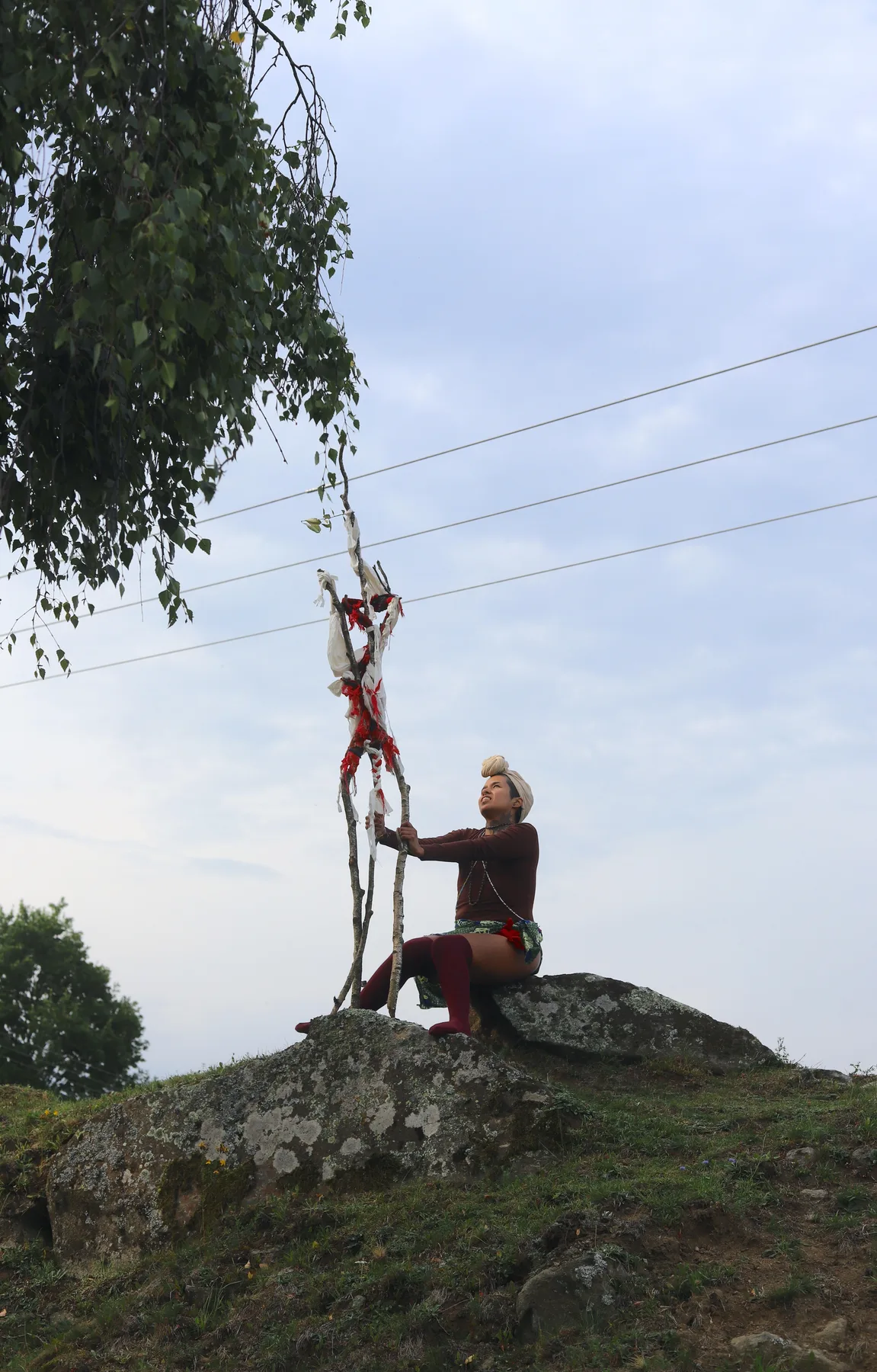
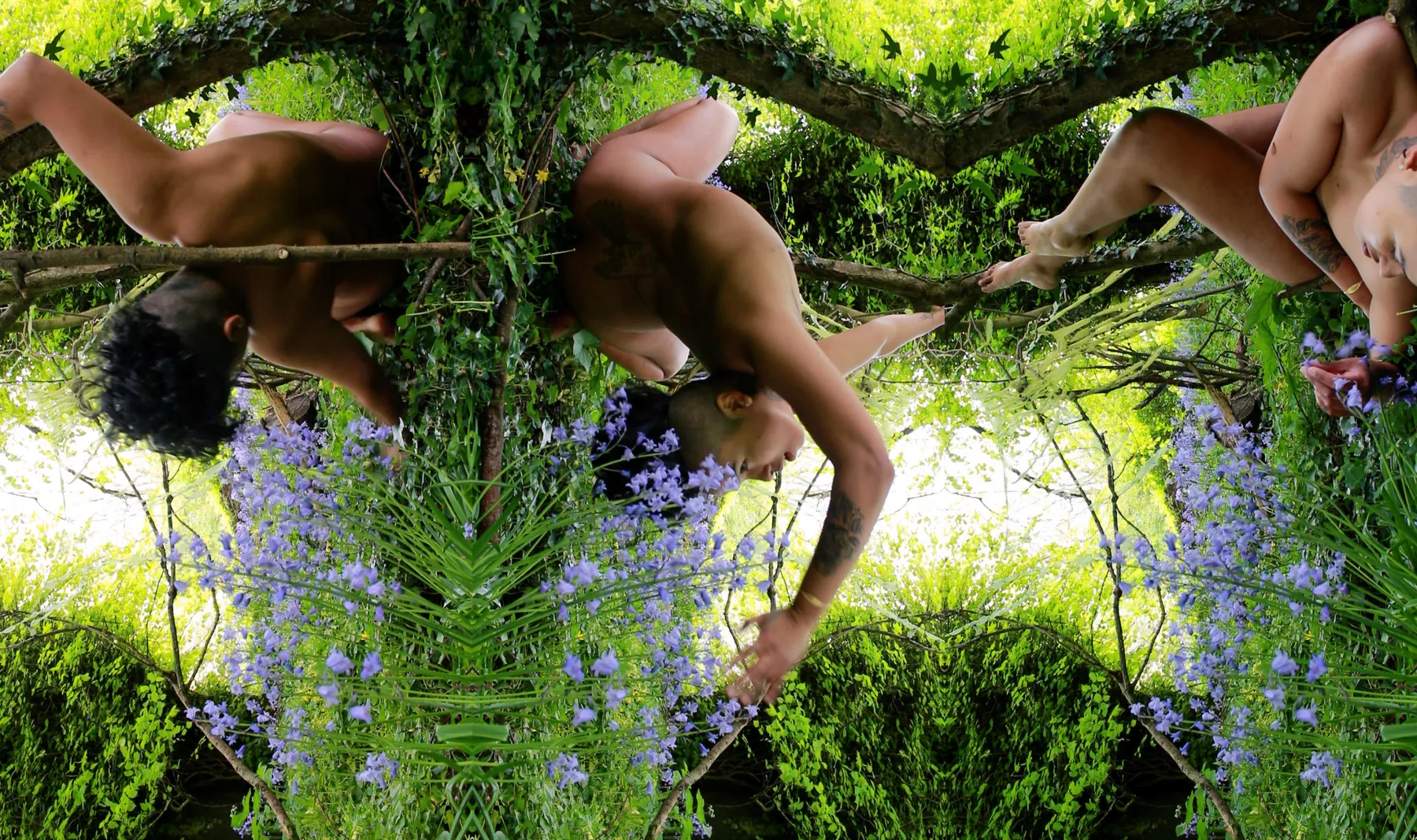
Performance documentation by lwrds duniam with mirrored bodies in a green landscape.
lwrds duniam, Khipucamayoc: Weaver of Arboreal Entanglements, performance documentation, 2025. Photo by Natalia Benish-Kalná.
Program overview

A space for experimentation, visibility, and professional development.

Conceived as a space for experimentation, visibility, and professional development, the festival addresses the limited availability of opportunities that meaningfully support neurodivergent artists and their access needs. By centring neurodivergent performers, LILT creates a context in which artists can present work on their terms while contributing to critical conversations around access, embodiment, duration, and live art practice.

LILT Festival operates as both a presentation platform and a support structure for artists with diverse sensory, cognitive, and relational needs. It proposes a model of festival-making in which accessibility is not approached as an afterthought but is embedded as a core principle of artistic production, presentation, and exchange.

The 2026 festival unfolds over two days, Wednesday, May 13, 2026, and Thursday, May 14, 2026, and includes a wide range of live performances by artists working across different durations, forms, and energies. Audiences are welcome to attend a single performance or stay for a longer portion of the festival. There will be short breaks between most performances. Audience members entering or leaving during performances are kindly asked to do so as quietly and mindfully as possible, with care for the performers and those around them. Please refrain from wearing scented products.

Tickets

Sliding scale, directly supporting artists.

Tickets are available on a sliding scale from $1–$20 CAD. All proceeds from ticket sales go directly to the presenting artists.

Schedule

Two days of live performance

Wednesday

May 13, 2026

  1. Doors Open and Audience Arrival
  2. Elaine Chan-Dow: Five Flower Tea (五花茶)

    Performance notes: Participatory work involving brewed herbal tea, dried botanicals, scent, taste, and optional honey. Snacks may also be provided. It is structured around sitting at a low table on the floor, with cushions provided. Chairs are also available for those who prefer not to sit on the floor. This performance involves herbal tea, botanicals, and snacks. Participants with allergies, sensitivities, or dietary concerns are encouraged to check the ingredients first. Participants are invited on a first-come, first-served basis.

  3. Break
  4. Hope-Adina Adler: Like a Bird

    Performance notes: This performance includes burlesque, stripping, and themes related to disability and stigma.

  5. Tess Martens: Easy Listening, Dancing, & Baking

    Performance notes: This performance includes 1990s pop and hip-hop music, dancing, baking smells, chewing gum, and references to childhood memory, mental health, trauma, and gendered domestic labour.

  6. Break
  7. Wang Zi: Canadian News, May 12, 2026: English with English Translation

    A score for two voices and one scroll

    Performance notes: This performance includes amplified voice and spoken correction and engages themes of language learning, mispronunciation, correction, migration, and mother–daughter relationships. The work may resonate strongly for audience members with experiences of accent correction, linguistic shame, or immigration-related language pressure or trauma.

  8. Break
  9. lwrds duniam: sigil medicine

    Performance notes: This performance includes nudity, themes of sexual trauma, disability, ritual death and rebirth, and embodied transformation. It also includes body marking with ink and volcanic ash clay, fabric wrapping, and imagery that may evoke mourning, vulnerability, or ceremonial practice. No direct audience participation is required.
Thursday

May 14, 2026

  1. Arrival and sign-up for Kat Singer’s performance
  2. Lux Gow-Habrich: Blood Song

    Performance notes: This performance engages themes of disability, racialized and gendered violence, intergenerational trauma, survival, and healing. It also includes sustained movement and layered sound. Please note that this performance includes partial nudity.

  3. Break
  4. Kat Singer: Stim Steward

    No photos during this performance

    The experience will be available for up to 12 participants. A sign-up sheet will be available on May 14 from 3:00 PM to 3:20 PM.

    Performance notes: One-on-one interactive performance inside a small, tented space, including close conversation, tactile engagement with soft textile objects, warm lighting, and themes of emotion, uncertainty, and personal reflection. Please note: Conversations in the tent are not therapy and are not intended to provide concrete answers or professional advice. Instead, they are offered as an artistic encounter and sensory process through which a question or emotion may be held and explored. Participants interested in this encounter are kindly asked to refrain from wearing scented products.

  5. Break
  6. Sof Kreidstein: Resonant Vessel

    Performance notes: This performance includes improvised vocalization in a group setting. Conscious of sensitivity, loud high-pitched sounds should not be included, but due to the unpredictable nature of collective sound making, this is not a guarantee.

  7. Break
  8. Parker A.M. Johnston: Isn’t Being a Man Supposed to Mean Something

    Performance notes: This performance includes themes of transmasculinity, toxic masculinity, intergenerational trauma, family violence and neglect, monstrosity, bodily injury, blood, self-harm, suicidal ideation, and consuming/devouring imagery. It also includes projected images layered over the performer’s body and images of surgery scars, which may be difficult for audience members with experiences of medical trauma. If you need support in Canada, call or text 9-8-8. Trans and questioning people in Canada can also contact Trans Lifeline Canada at 1-877-330-6366.

    Access note: Printed text handouts on the performance will be available for audience members who find them helpful.

Artists and performances

The works

May 13 · 3:20 PM

Pixel Heller

Guardian Figure

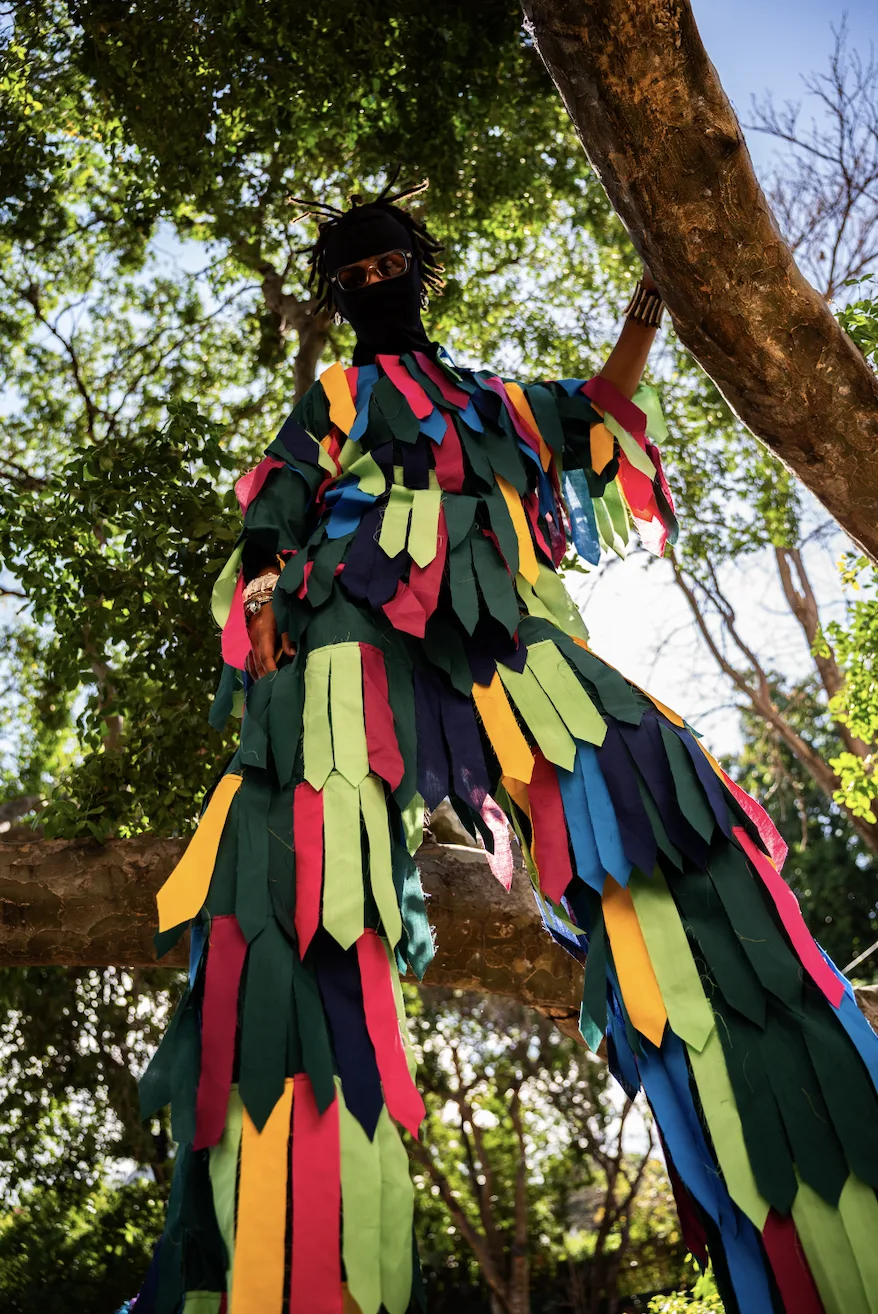
Pixel Heller in a colorful Moko Jumbie costume standing outdoors at height.
Pixel Heller, Northern Jumbie, digital photograph, 2025. Courtesy of the artist.

In Guardian Figure, Pixel Heller presents a Moko Jumbie stilt-walking performance rooted in Caribbean masquerade traditions and a lineage shaped by West African spiritual practices. For Heller, the Moko Jumbie is not simply a visual symbol but also an embodied presence associated with protection, ancestral knowledge, and cultural continuity. Bringing this form into contemporary performance, she approaches stilt walking as a living tradition and public expression, carrying diasporic history into the space of the present.

Rather than treating tradition as something fixed in the past, Heller’s performance foregrounds its continued life and adaptation across contemporary Black diasporic contexts. Through scale, costume, and movement, Guardian Figure affirms Moko Jumbie as a carrier of memory, resistance, and cultural presence.

Content note

This performance includes stilt walking at height and themes of ancestry, Black diasporic history, and cultural continuity.

Bio

Pixel Heller (she/her) is a multidisciplinary artist, international performer, and founder of Northern Jumbies Inc., based in Toronto, Canada. Her work spans performance, photography, textiles, ceramics, and painting. Influenced by her Afro-Caribbean heritage, her practice engages with themes of Black identity, cultural preservation, and carnival masquerade. Pixel’s art explores the complexities of heritage and tradition and the intersection of personal and collective histories. Through masquerade, she explores the resilience and evolution of Black culture, shaping costume, sculpture, and performance into reflections of history and acts of resistance.

Heller graduated from OCAD University in 2024 with a BFA in Cross-Disciplinary Studies, with a specialization in Life Studies. Pixel has recently expanded her practice into community engagement through Northern Jumbies Inc. Rooted in Afro-Caribbean heritage, Northern Jumbies brings people together through movement, storytelling, and the powerful legacy of Moko Jumbie. Through this work, Pixel facilitates Moko Jumbie stilt-dancing workshops, performances, and community programming as part of her mission to preserve and celebrate Black traditions within the diaspora.

Pixel has exhibited at the Robert McLauchlin Gallery, Gallery 44, NAMARA Projects, MCA Gallery, Meridian Arts Center, Gallery 1313, and internationally at the Black Brazil Art Biennial. She has artwork in The Wedge Collection and won the OCAD U Medal for Cross-Disciplinary Art. She has performed at the ROM, Budweiser Stage, BMO Field, and the Waterloo Region Museum and internationally in the United Kingdom, Trinidad, Grenada, and Jamaica.

May 13 · 3:40 PM

Elaine Chan-Dow

Five Flower Tea (五花茶)

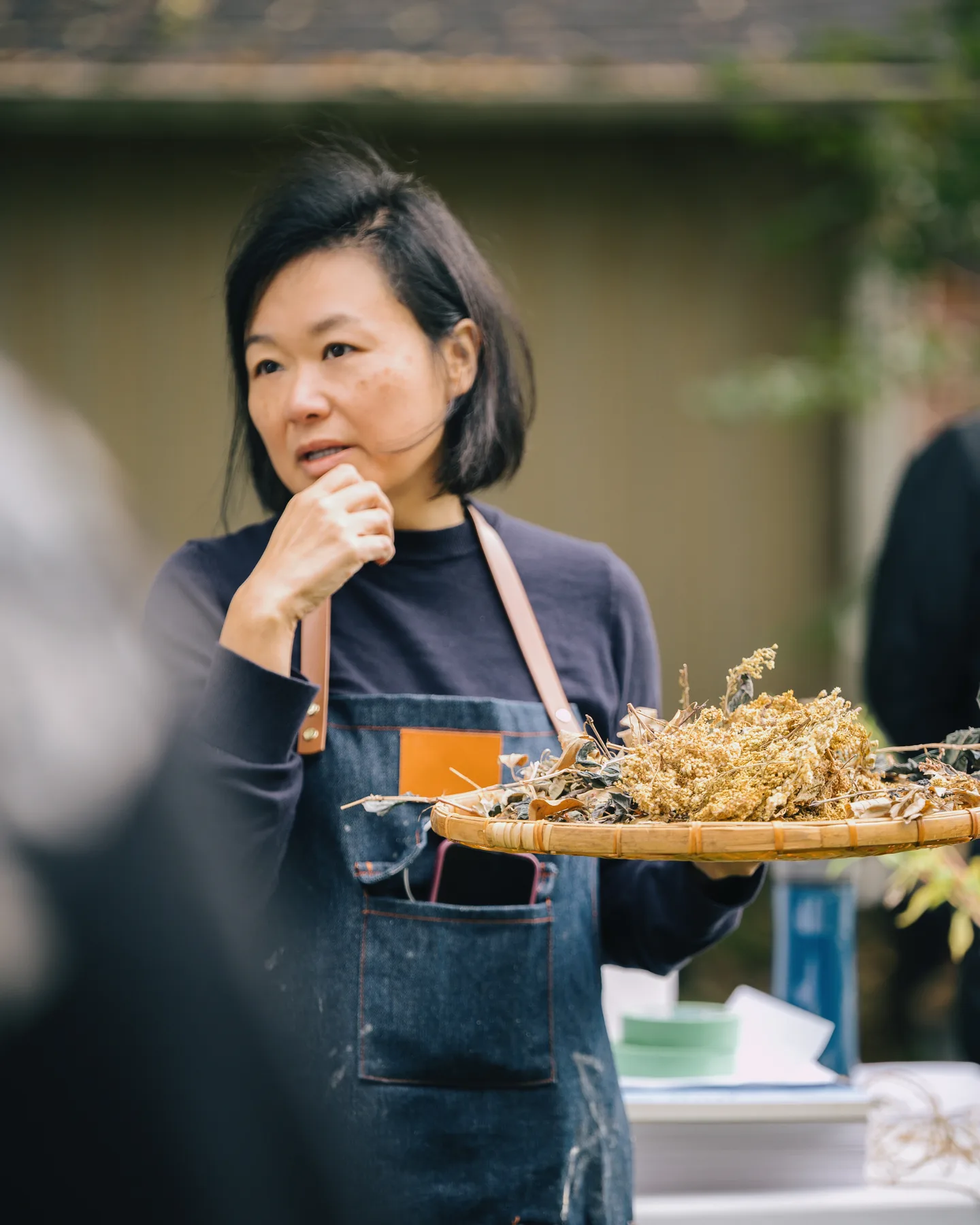
Elaine Chan-Dow holding a tray of botanicals during an outdoor gathering.
Elaine Chan-Dow, Community Picnic, Edgeland Collective, photographic image, natural dye, plant fibres, 2025. Courtesy of the artist.
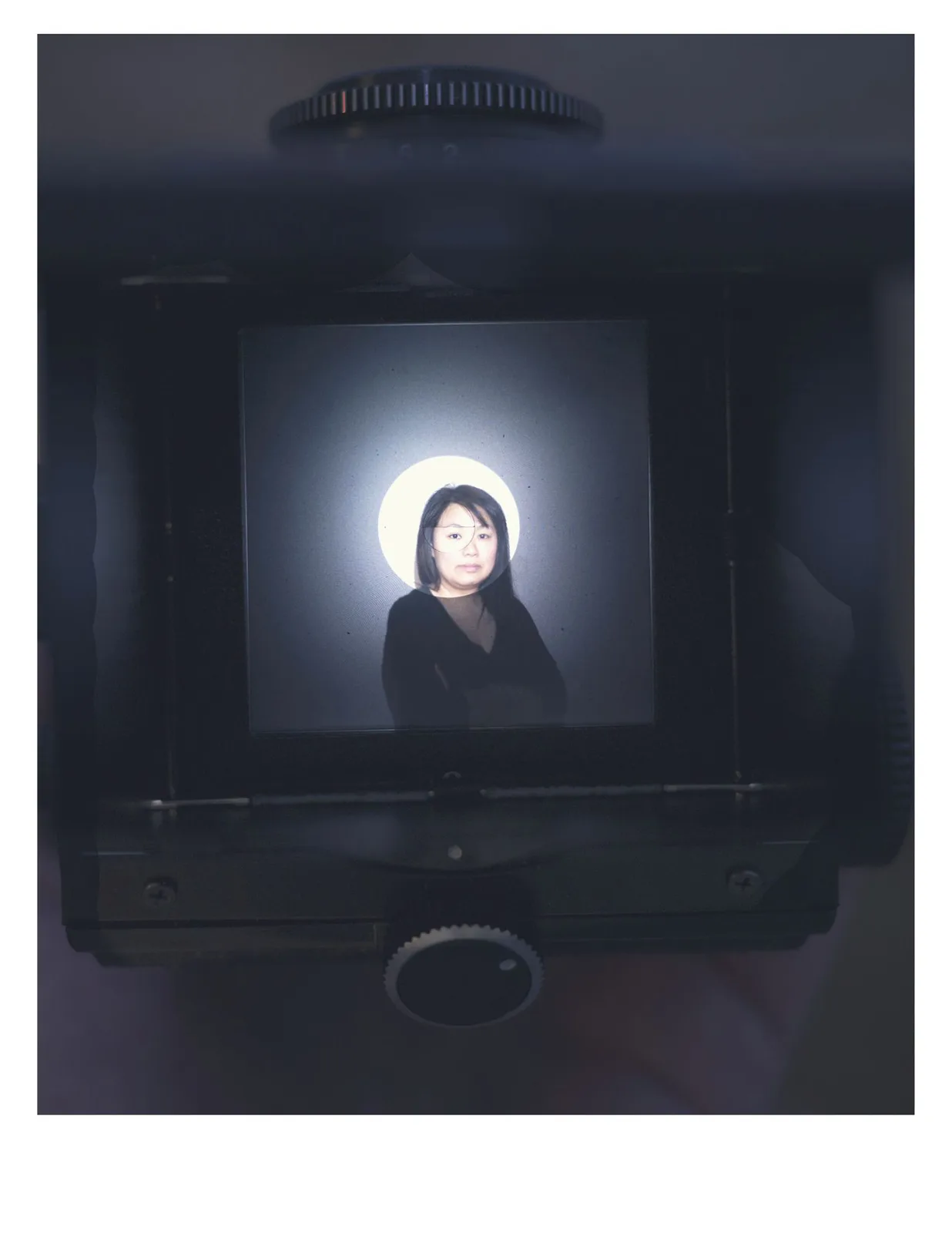
Elaine Chan-Dow self portrait viewed through a circular illuminated frame.
Elaine Chan-Dow Self Portrait.

In Five Flower Tea (五花茶), Elaine Chan-Dow mobilizes the collective preparation and sharing of herbal tea as a participatory framework through which questions of cultural transmission, adaptation, and diasporic identity can be examined materially and sensorially. Rather than treating tea as a neutral object of consumption, the work positions it as a site of embodied knowledge, where memory, migration, and everyday practice converge through acts of handling, observing, tasting, and reflecting.

Participants encounter dried botanicals being prepared and transformed in water and are invited to consider a deliberate choice: whether to add honey. This seemingly insignificant decision functions as a critical element within the work. It functions as a material marker of Western adaptation, making visible the subtle negotiations of taste, translation, and assimilation within diasporic life. In this sense, the work attends to the small but consequential modifications through which diasporic experience is lived and reproduced. For the ceremony, participants will be invited to gather around a low table seated on floor cushions. Chairs will also be available for those who find sitting on the floor difficult.

Grounded in Chan-Dow’s Growing Art methodology, Five Flower Tea (五花茶) understands the body as an active site of knowledge making. Meaning emerges here not solely through language or representation but through sensory attention and situated response. Participants are invited to reflect on their sensory experience and decision-making process, contributing to a collective tea log that records how the work is encountered and altered over time. In Five Flower Tea (五花茶), the act of sharing tea becomes a means of tracing how culture persists through intimate gestures of adjustment and transmission.

Content note

The participatory work involves brewed herbal tea, dried botanicals, scent, taste, and optional honey. Snacks may also be provided. The performance is structured around sitting at a low table on the floor with cushions provided, or for those who prefer not to sit on the floor, sitting on available chairs. Please note that this performance involves herbal tea, botanicals, and snacks. Those with allergies, sensitivities, or dietary concerns are encouraged to check the ingredients before participating.

Bio

Elaine Chan-Dow (she/her) is a Chinese Canadian transdisciplinary artist, researcher, and educator whose work explores the entanglements of art, culture, and sustainability. Her current artwork is grounded in sustainable, site-responsive practices—her installations often emerging from foraged, repurposed, and cultivated materials reflecting the diasporic experience and the ecological politics of place. Working at the intersection of plants, memory, migration, and the environment, Elaine’s projects incorporate participatory methods and storytelling through visual and other sensory forms. Her ongoing research, supported by the Ontario Graduate Scholarship and the SSHRC Fellowship, focuses on plant histories, herbal knowledge, and the embodied transmission of culture through food and land-based practices.

Elaine is also the co-founder of Edgeland Collective, a creative initiative dedicated to transforming urban wilds into spaces for ecological and cultural regeneration in the east end of Toronto, and was the former chair of the Modern Fuel artist-run centre in Kingston, Ontario.

Her recent exhibitions include Nuit Blanche Toronto 2025, Union Gallery, Agnes Etherington Art Centre, and ArtLab, and Western University. She was an ambassador for Sony Canada, featured on Rogers TV, and interviewed by the CBC. Her photographic works have been published in publications, including the LCBO, Global TV, The Toronto Star, and the CBC.

Elaine is currently developing permaculture experiments and establishing an eco-art residency on her farm in Prince Edward County. When she is not on her farm, she teaches at the University of Guelph–Humber and conducts research at Queen’s University in Kingston, Canada, where she is completing her PhD in Culture Studies. Previously, Elaine attained a BA from the University of Toronto, a BFA from Toronto Metropolitan University, and an MFA from York University.

May 13 · 4:50 PM

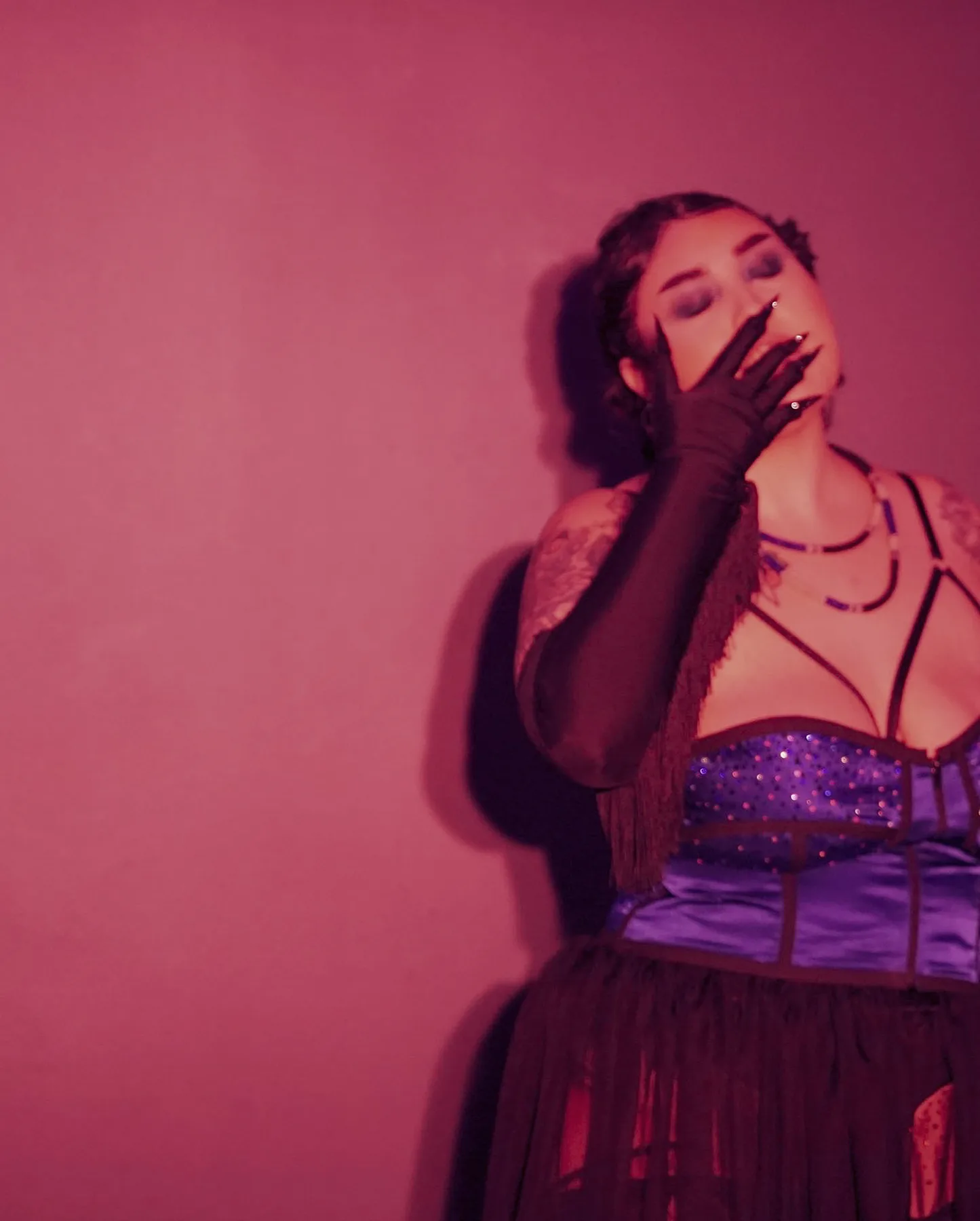
Hope-Adina Adler

Like a Bird

Hope-Adina Adler posing against a pink background.
Hope-Adina Adler, digital photograph, 2024. Courtesy of the artist.

What might it mean to encounter a mobility aid not as a sign of limitation but as a source of freedom, movement, and possibility? In Like a Bird, Hope-Adina Adler presents a burlesque-style performance that centres their rollator as a source of freedom, movement, and expanded possibility. Through dance, gesture, and stripping, the work challenges the fear and discomfort that are often projected onto mobility aids and disabled bodies. Rather than treating the rollator as a symbol of limitation, Adler uses performance to show how it supports motion, independence, and pleasure.

The work also engages visibility and stigma through costume and reveal. Adler plans to make their ostomy visible as part of the act, bringing another aspect of disabled embodiment into the performance that is often hidden or misunderstood. In this way, Like a Bird uses the language of burlesque not only as entertainment but also as a strategy of disclosure, confidence, and refusal. The performance invites audiences to encounter disability not through shame or anxiety but through presence, style, and self-possession.

Grounded in Adler’s long-standing relationship with burlesque and live performance, Like a Bird combines sensuality, humour, and lived experience in an act of affirmation. The piece is about disability visibility, involving agency, desirability, and the right to be seen fully and without apology.

Content note

This performance includes burlesque, stripping, and themes related to disability and stigma.

Bio

Hope-Adina Adler (they/them) is a multidisciplinary artist and performer with over 20 years of experience across visual art, makeup, and live performance. A second-generation Native artist, they have spent the past 11 years developing a burlesque practice shaped by embodiment, theatricality, and self-expression. Their work also includes go-go dancing and stage support, reflecting a longstanding commitment to live performance and cabaret-based forms. Adler has worked with organizations, including TDC and Luminato, and brings to their practice a deep investment in performance as a space of visibility, transformation, and connection. Drawing from lived experience as a disabled artist who wears medical devices and uses a mobility aid, they are interested in how performance can challenge stigma and expand how disabled bodies are seen in public space.

May 13 · 5:00 PM

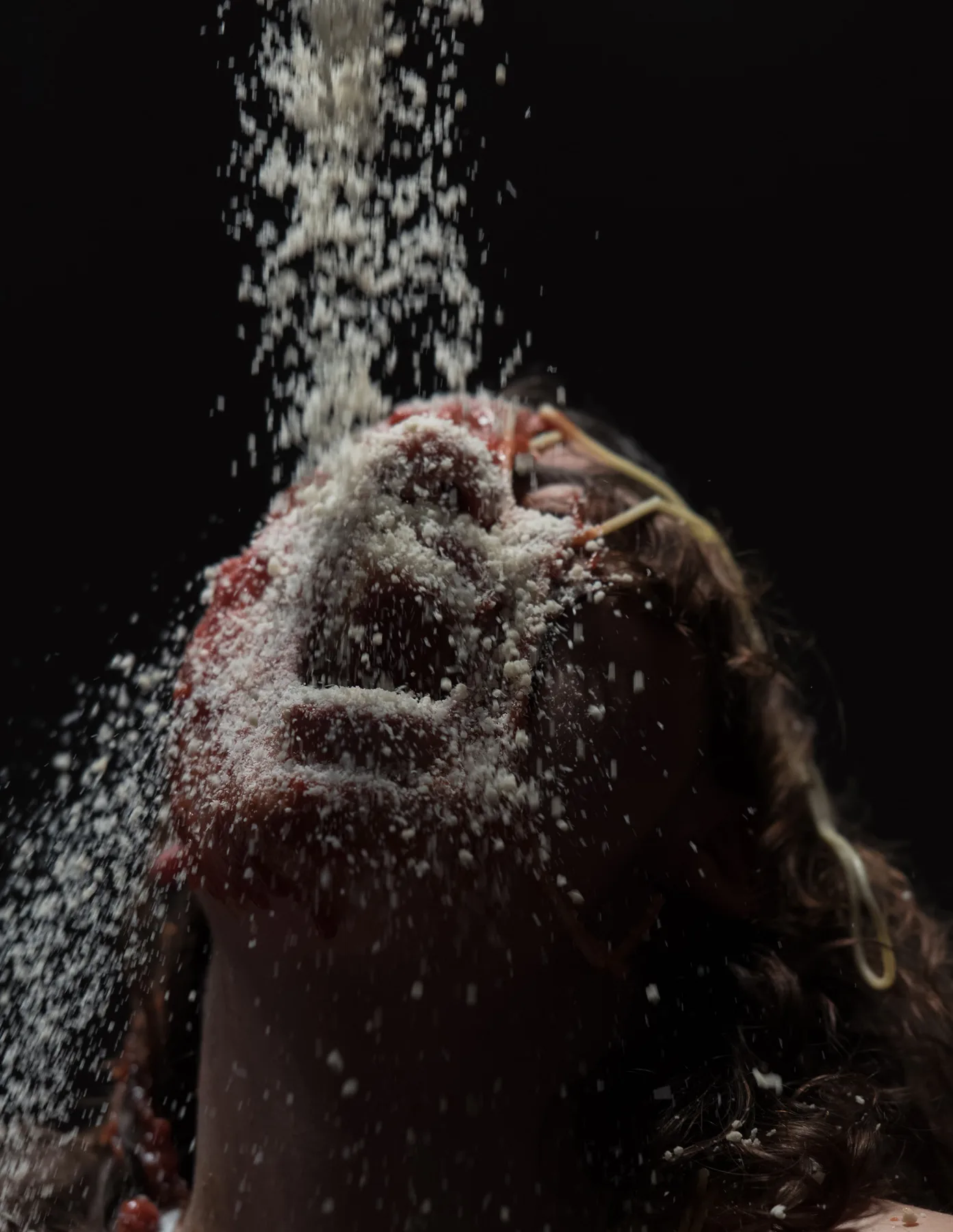
Tess Martens

Easy Listening, Dancing, & Baking

Tess Martens performance image with powder falling across the artist's face.
Tess Martens, Jelly Belly, 2020. Photo by Fenia Kotsopoulou. Courtesy of the artist.

In Easy Listening, Dancing, & Baking, Tess Martens brings together movement, music, domestic labour, and memory through a performance built around an Easy Bake Oven. Dancing to 1990s hip hop and pop while preparing small cakes, Martens reactivates the kitchen as a site of private pleasure, emotional regulation, and self-fashioned ritual. What begins as an apparently light and playful scene gradually opens onto a more layered consideration of gender, neurodivergence, childhood memory, and the emotional residue of domestic life.

The work draws from formative experiences of being alone in the kitchen as a child, dancing on Friday nights, baking to self-soothe, and finding companionship in one’s routines. In returning to these gestures through performance, Martens explores nostalgia and treats remembrance as an active structure through which past habits, comforts, and vulnerabilities continue to shape the present. A highly recognizable object associated with childhood femininity and domestic play, the Easy Bake Oven becomes a charged device through which constraint, humour, and identity are conveyed.

Martens’s performance is marked by multitasking, repetition, and tonal slippage. Dancing, baking, chewing pink bubble gum, and moving between sincerity and comic excess, she mobilizes humour. The work embraces pop culture and kitchen performance as ways of approaching subjects that are often more difficult to name directly, including mental health, trauma and the social expectations attached to femininity in domestic spaces. In this setting, the figure of the woman in the kitchen is neither straightforwardly affirmed nor rejected but reworked through pleasure, absurdity, and embodied self-possession.

Easy Listening, Dancing, & Baking proposes the domestic scene as a complex performative field in which coping, memory, and resistance remain entangled. Through cake baking, choreography, and pop music, Martens transforms private routine into a public language of survival, agency, and selfmade joy.

Content note

This performance includes 1990s pop and hip-hop music, dancing, baking smells, chewing gum, and references to childhood memory, mental health, trauma, and gendered domestic labour.

Bio

Tess Martens (she/her) graduated from the University of Waterloo with a Master of Fine Arts focusing on performance art in 2018. In her art practice, personal experiences are recontextualized through performances. Between 2019 and 2020, she traveled and performed in four residency programs across four countries. She worked closely with Marilyn Arsem, La Pocha Nostra, VestAndPage, and Andrigo & Aliprandi. She performs actively in Ontario and Quebec, whether as an official performer for festivals, galleries, and artist-run centres or in more underground spaces, relying solely on herself to create!

May 13 · 5:30 PM

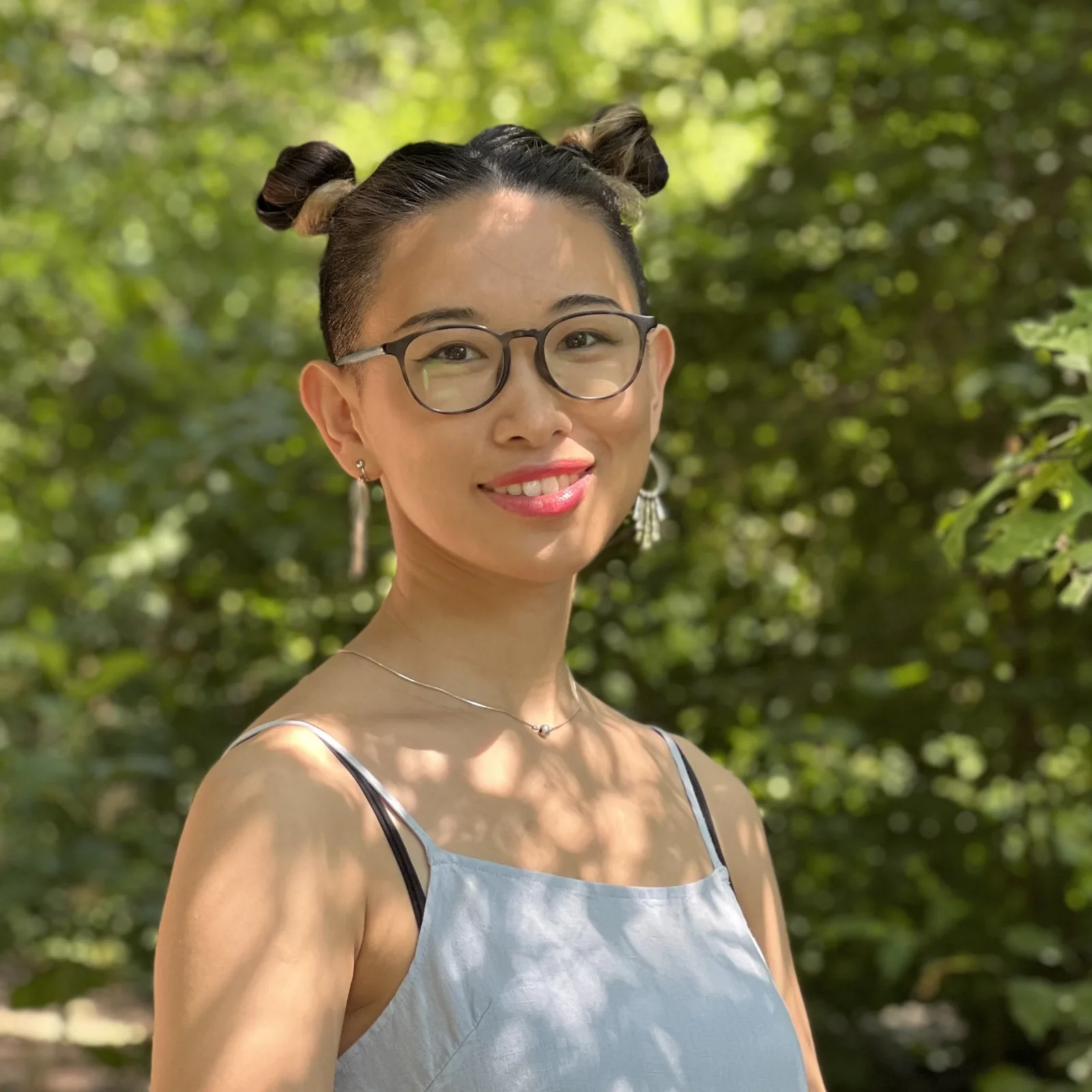
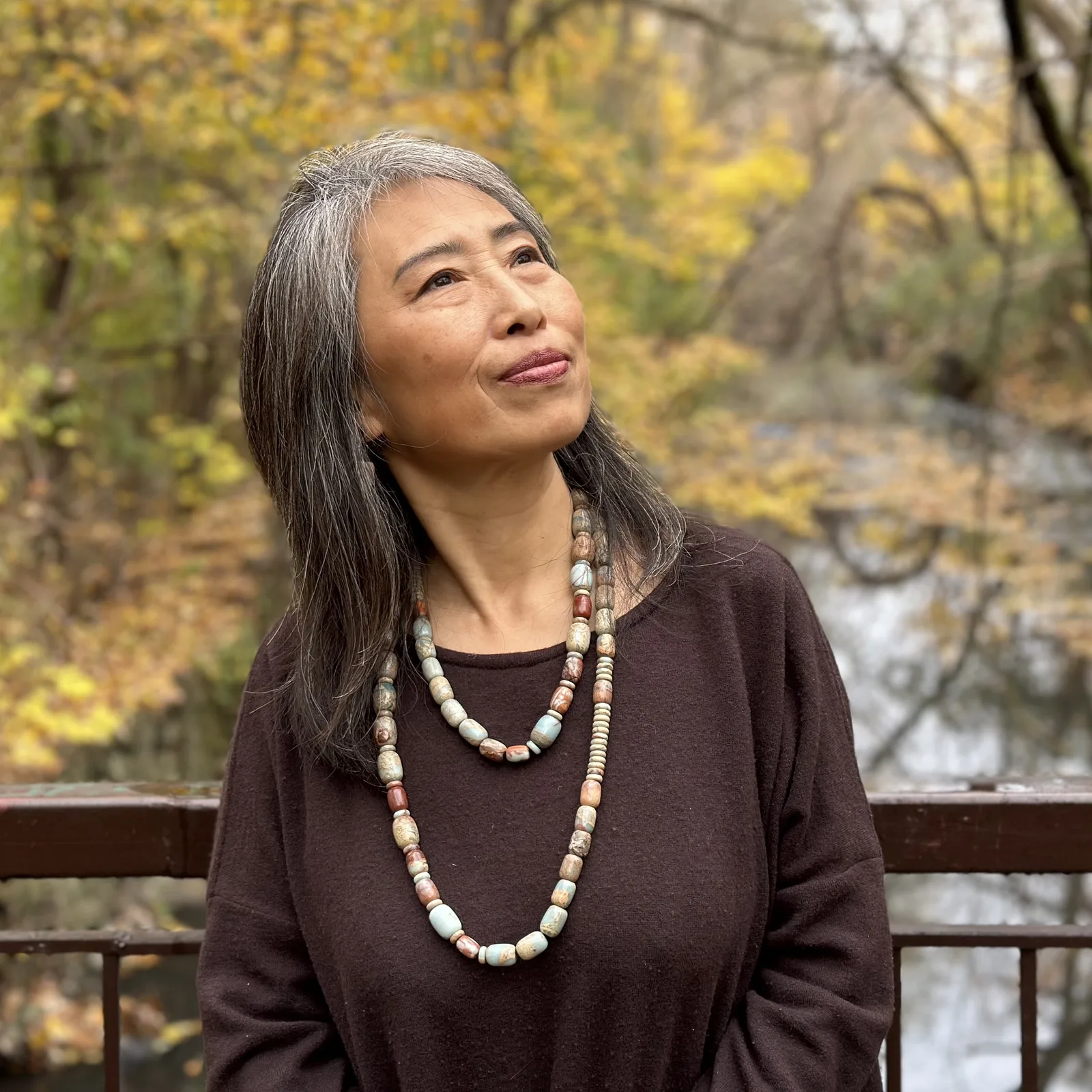
Wang Zi

Canadian News, May 12, 2026: English with English Translation

A score for two voices and one scroll

Portrait of Wang Zi outdoors.
Wang Zi, digital photograph, 2023. Photo by Angela Pan. Courtesy of the artist.
Portrait of Zhu Dandan outdoors.
Zhu Dandan, digital photograph, 2024. Photo by Wang Zi. Courtesy of the artist.

In Canadian News, May 12, 2026: English with English Translation, Wang Zi examines language acquisition as a site of relation, discipline, and translation. Developed within her ongoing project First Language Spoken, the work attends to the unstable interval in which language has not yet settled into correctness, where pronunciation falters, syntax hesitates, and meaning is negotiated through effort. Rather than treating such moments as needing correction or erasure, Wang repositions them as material, sonic, and visual events.

Presented as a single 25–30-minute performance, the work centres on Wang and her mother, Zhu Dandan, seated across from one another, with a long scroll of Xuan paper stretched between them.

As Dandan reads a Canadian news article aloud in English, Wang listens to and records each mispronounced word by hand on the scroll. She then announces these corrections through a microphone, thus returning them to the space as amplified speech. The correctly spoken words remain unwritten.

What emerges is a sparse, uneven textual field that records not fluency but the structures surrounding its production. The scroll functions as a visual index of correction, hesitation, and attention, while its broad unwritten spaces register the negative field of language learning. In this context, correction operates not simply as pedagogy but as a relational and intra-linguistic process through which English is repeated, displaced, and heard in alternative ways.

Audience members may quietly move through the space and determine their positions as listeners, whether attending to the intimate cadence of Dandan’s reading or to the amplified corrections as they enter the gallery. Through this shifting acoustic and spatial arrangement, the performance foregrounds how language is mediated by proximity and power. Canadian News, May 12, 2026: English with English Translation proposes mispronunciation as trace: a record of learning, familial relation, and the uneven conditions under which language is inhabited.

Content note

The work includes amplified voice and spoken correction and engages themes of language learning, mispronunciation, correction, migration, and mother–daughter relationships. The work may resonate strongly for audience members with experiences of accent correction, linguistic shame, and immigration-related language pressure or trauma.

Bio

Wang Zi 王紫 (she/her, born in Nanjing, China) is a Tkaronto/Toronto-based artist–educator whose interdisciplinary practice spans print-based installation, performance, sound, and socially engaged art. Her research examines cultural memory and object biography through domestic archives and diasporic life using (mis)translation as a critical methodology. Born and raised in Nanjing, she lives and works between Canada and Italy. She holds a BFA and BDes from OCAD University, an MA in Arts Management from SDA Bocconi, and an MFA in Visual Arts from York University. Her work has been exhibited internationally at ICA Shanghai, Inbe Art Space (Japan), and Metís Space (Hong Kong) and in Canada at the Ontario Legislative Assembly and the Canada Council Art Bank. She has served as artist-in-residence at the Richmond Hill Public Library (2022) and the Toronto Public Library (2024). She teaches in the Creative Technologies program at York University.

May 13 · 6:10 PM

lwrds duniam

sigil medicine

lwrds duniam performance documentation outdoors with a wrapped structure.
lwrds duniam, Pachamama triptych spell, digital performance documentation, 2023. Courtesy of the artist.
Mirrored performance documentation by lwrds duniam in a green landscape.
lwrds duniam, Khipucamayoc: Weaver of Arboreal Entanglements, performance documentation, 2025. Photo by Natalia Benish-Kalná.

What forms of care, transformation, and power can ritual make possible for a body in transition? In sigil medicine, lwrds duniam presents a one-hour performance that examines embodiment, ritual care, and channeling astral energies.

Emerging from their broader Brujería Praxis, lwrds’s work is grounded in somatic listening, ceremonial gesture, and kinship with the more-than-human world. It draws on an ongoing process of healing shaped by Blackness, Indigeneity, gender variance, disability, neurodivergence, and lived experiences of bodily transformation.

The performance unfolds through a sequence of ritual actions: Using ink and found branches to draw sigils, wrapping themselves in textiles, and further marking their body with volcanic ash clay, lwrds engages death and rebirth not as fixed opposites but as ongoing states of transition. The performance considers how the body carries multiple temporalities simultaneously and how ritual can serve as a means to navigate change, survival, and becoming.

Ink, clay, fabric, gesture, and found materials are brought together in a process that treats the body as site and witness, shaped by land memory, context, and lived experience. Rather than offering resolution, the work remains with transformation itself, staging ritual as a practice of passage, vulnerability, and power.

Content note

This performance includes nudity, themes of sexual trauma, disability, ritual death and rebirth, and embodied transformation. It also includes body marking with ink and volcanic ash clay, fabric wrapping, and imagery that may evoke mourning, vulnerability, or ceremonial practice. No direct audience participation is required.
Bio

lwrds duniam (they/them) is an interdisciplinary artist, designer, researcher, educator, and 2019 OCAD University graduate (BFA Integrated Media) living and creating in Tkaronto. Born in Callao, Perú, in 1984, lwrds has been calling Turtle Island (North America) home since 2002. With a studio practice guided by Afrodiasporic and Indigenous Cosmologies, their ARTivism is grounded in disability justice and decolonial critical theory and is antiracist, anti-oppressive, sex positive, and trauma informed. lwrds has presented work nationally and internationally, and attended international residencies in Brazil (forthcoming), Czechia, Ireland, Mexico, South Africa, and the US. In 2024, they won the Transformative Territories award of the COAL Prize—Creative Europe Programme and were invited to produce site-specific work at ArtMill in Czechia (2025). They are a founding member of the “Trans Africa Collective” and recently joined the international action group “Broken Forests—Fireweed.”

May 14 · 3:20 PM

Christopher He

Misfortune

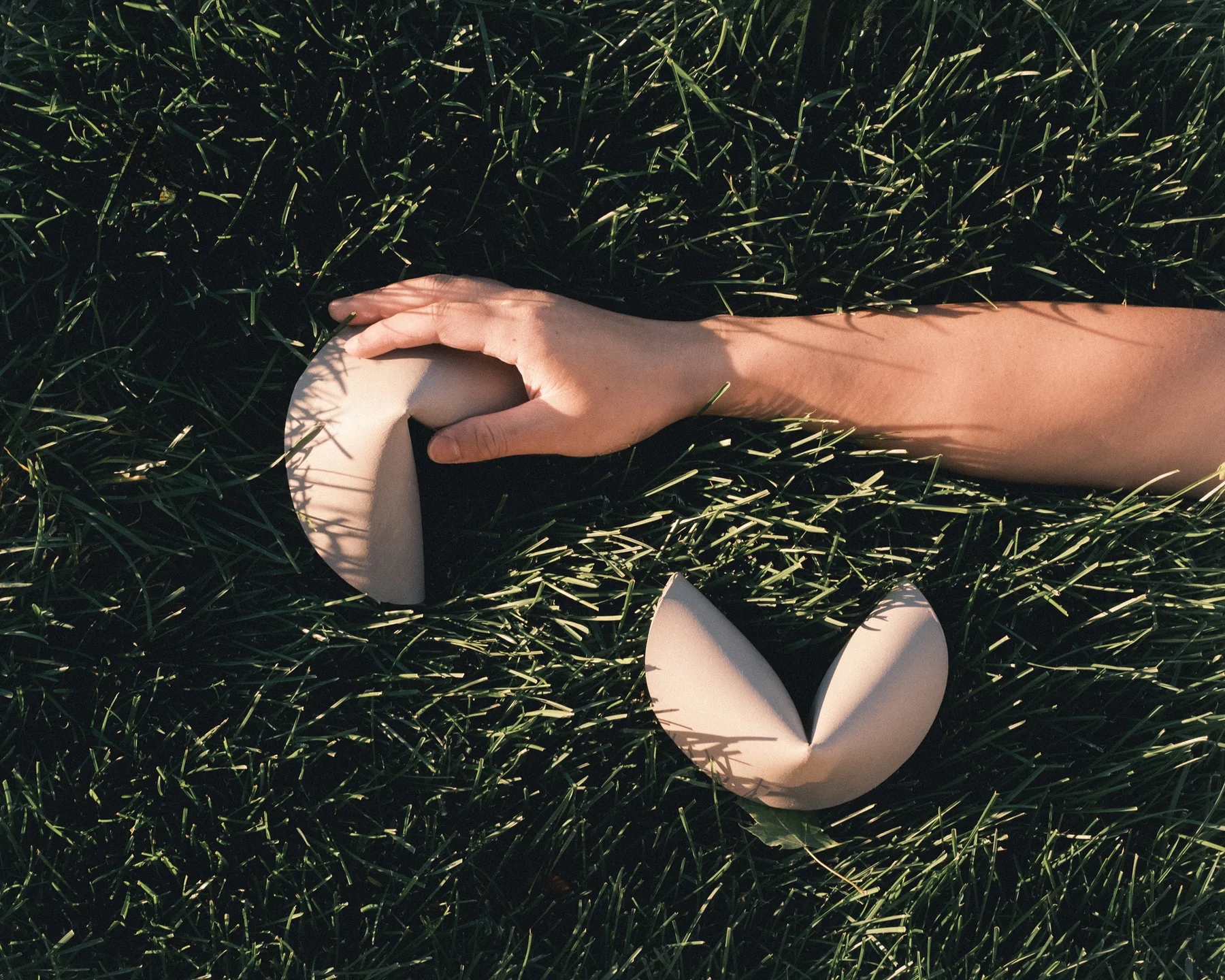
A ceramic fortune cookie object split open on grass.
Christopher He, digital photograph, 2025. Courtesy of the artist. Special thank you to Alexander Jacobi (@alexanderjacobiphotography).

In Misfortune, Christopher He undertakes the repair of a large ceramic fortune cookie, using mending to reflect on cultural identity, fracture, and reconstruction. Centring an instantly recognizable yet culturally unstable form, the work turns to a familiar object to consider the tensions surrounding inheritance, misunderstanding, and belonging. The fortune cookie becomes not only a symbol but also a materially charged form evincing questions of translation and self-recognition.

Seated on the floor, He carefully sews together the shards of a broken ceramic fortune cookie. The action unfolds slowly and with restraint, drawing attention to labour, fragility, and duration rather than spectacle. As the thread passes through the fractured ceramic pieces, repair becomes visible as a process and a proposition. The object is not returned to an untouched state. Its cracks and seams remain, bearing the marks of damage alongside the evidence of care.

The performance extends concerns already active within He’s broader studio practice, where acts of handling, assemblage, and material transformation function as conceptual and formalist strategies. Here, these concerns are brought to a public context. The audience witnesses mending as a deliberate, intimate act that approaches repair not as erasure or resolution but as a simultaneous contemplation of rupture and continuity.

Content note

This performance includes the handling and repair of broken ceramic shards and engages themes of cultural identity, rupture, and repair.

Bio

Christopher He (he/they) is a Waterloo-based mixed-media artist whose practice spans ceramics, printmaking, installation, sound, and performance. Working with familiar objects and decorative forms, he considers how everyday materials can raise questions of cultural memory, identity, and belonging. Drawing from personal experience and an interest in object biography, He’s work considers how ordinary objects can become charged with histories of inheritance, translation, and emotional association. Across sculptural and image-based forms, he draws close attention to process, material transformation, and the symbolic life of domestic objects. Recent projects, including Echoes in the Bloom, Siku, and Scripted, reflect his ongoing engagement with memory, fragility, and the relationship between private experience and public form.

May 14 · 3:55 PM

Lux Gow-Habrich

Blood Song

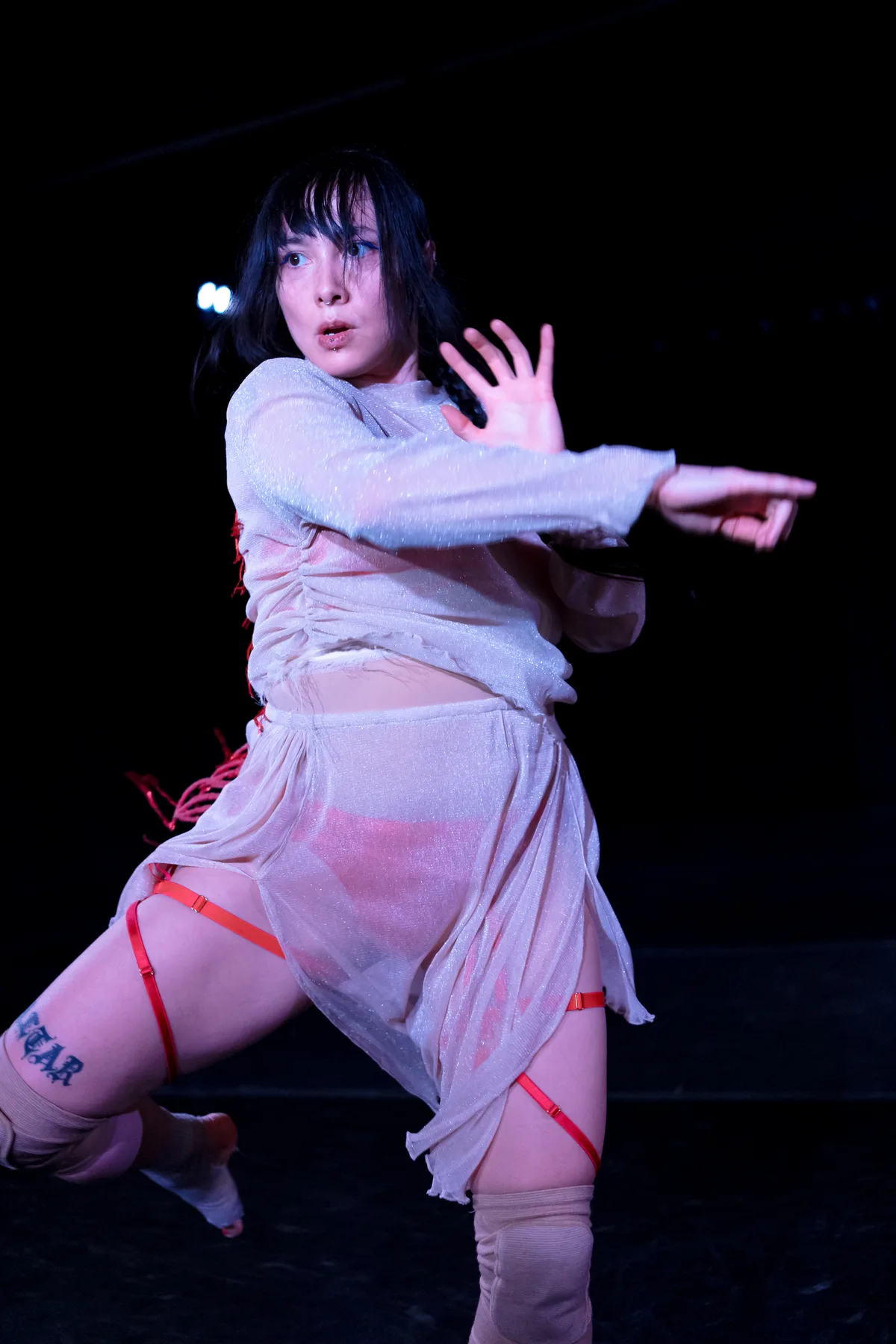
Lux Gow-Habrich performing Blood Song in a white costume with red beaded work.
Lux Gow-Habrich, Blood Song, performance, 2025. Photo by Kevin MacCormack (@kevinthefellow). Courtesy of the artist.
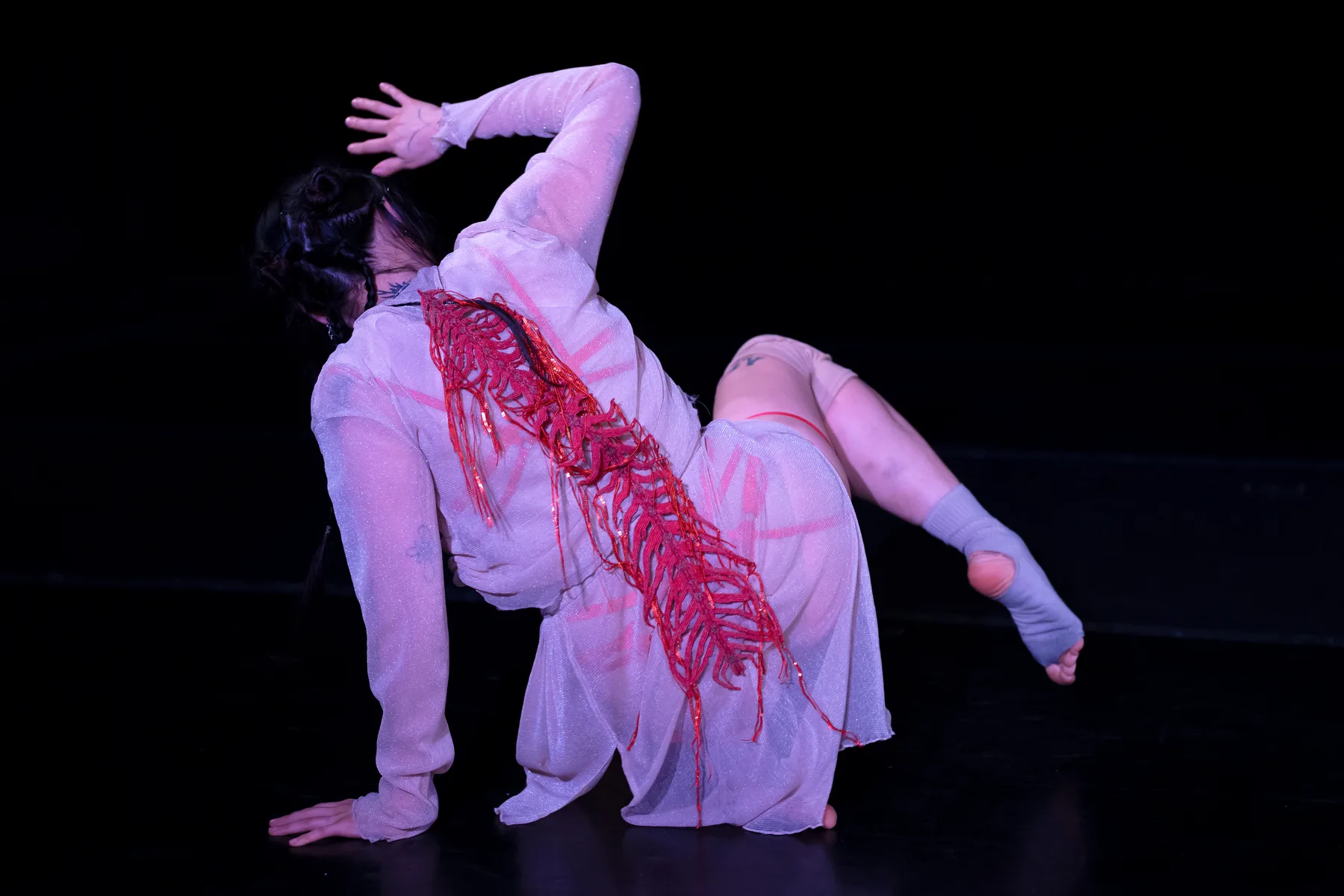
Lux Gow-Habrich performing Blood Song on the floor in a white costume with red beaded work.
Lux Gow-Habrich, Blood Song, performance, 2025. Photo by Kevin MacCormack (@kevinthefellow). Courtesy of the artist.

What does the body carry across generations, and how might movement give form to what memory cannot fully say? In Blood Song, Lux Gow-Habrich develops an experimental movement work informed by lived experiences at the intersections of disability, race, and gender. The performance focuses on a beaded, life-sized nervous system and a custom wearable activated through ancestral, iterative, and endurance-based movement. An original sound work layers recordings of the artist’s grandmother speaking Toishanese over the artist’s mother’s English translations and sounds from ceramic sculptures, creating an aural environment through which lineage, memory, and survival are held together.

Grounded in maternal histories shaped by the transcontinental railroad, the Head Tax, and the Exclusion Act, Blood Song traces intergenerational resilience within the ongoing violence of xenophobic Chinese Canadian migration legacies and the fetishization of feminine Asian bodies. Rather than separating mind from body, the work treats the nervous system as a site where movement, memory, and automatic responses are stored, transmitted, and lived. Through movement scores, Gow-Habrich investigates how bodily survival mechanisms can function as both forms of protection and points of constraint.

Content note

This performance engages themes of disability, racialized and gendered violence, intergenerational trauma, survival, and healing. It also includes sustained movement and layered sound. Please note that this performance includes partial nudity.

Bio

Lux Gow-Habrich (星尘) (she/they) is an interdisciplinary artist and support worker who channels the intimate histories and rich material teachings of ceramics and textiles to create sculptures and installations dedicated to the intersections of embodiment, cultural identity, care practices, and processes of rupture and repair. They blend performance, craft, and community storytelling to redefine understanding art and cultural practice as sacred remedial forces with the potential to profoundly reshape systems and relationships. Her interest in ritual, commemoration, and the body as an archive weaves together diasporic experiences of loss and belonging to unearth unspoken legacies of disabled and queer grief and empowerment.

May 14 · 4:30 PM

Kat Singer

Stim Steward

No photos during this performance

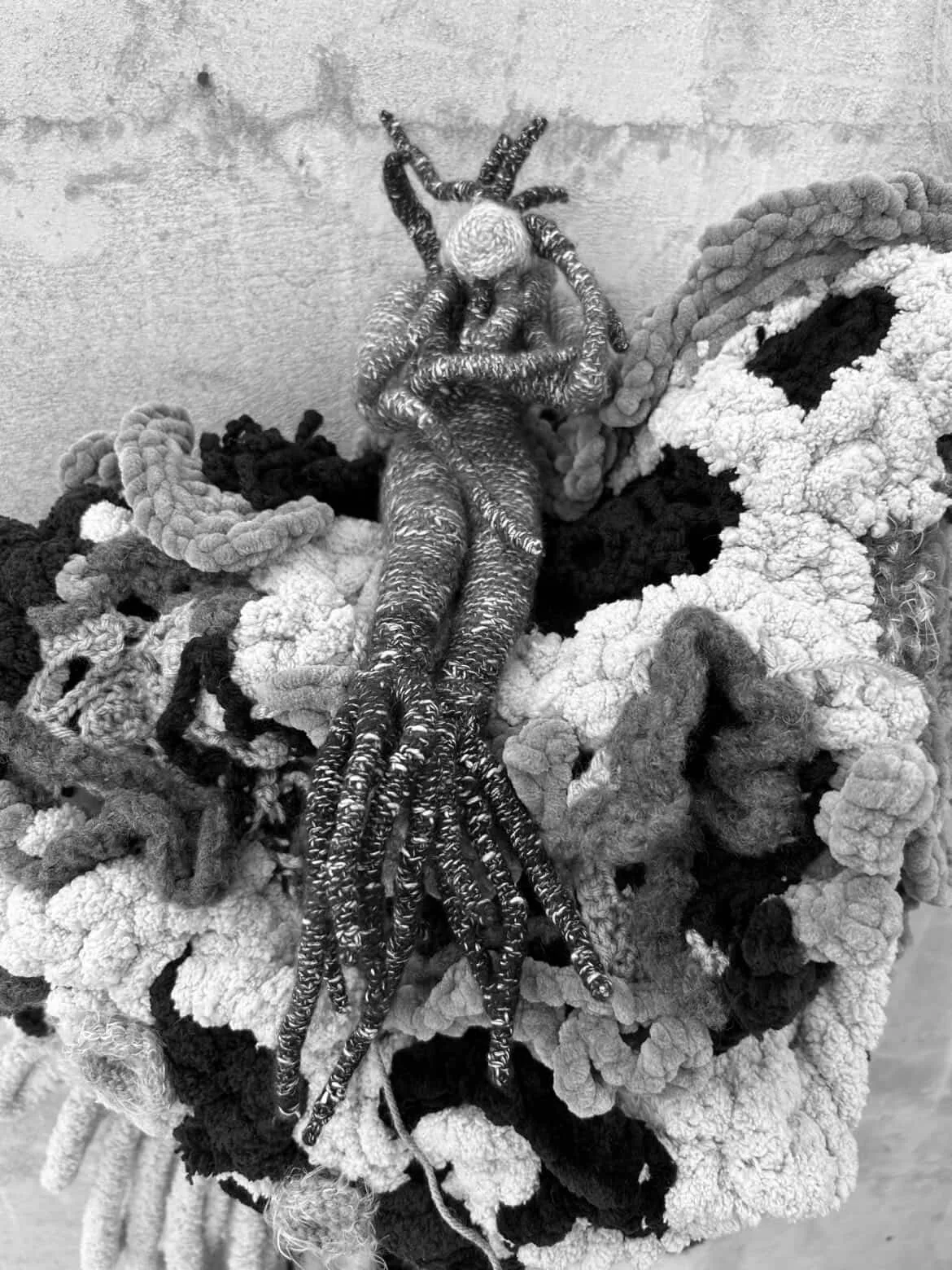
A tactile textile artwork by Kat Singer.
Kat Singer, Untitled, acrylic yarn, 2025. Courtesy of the artist.
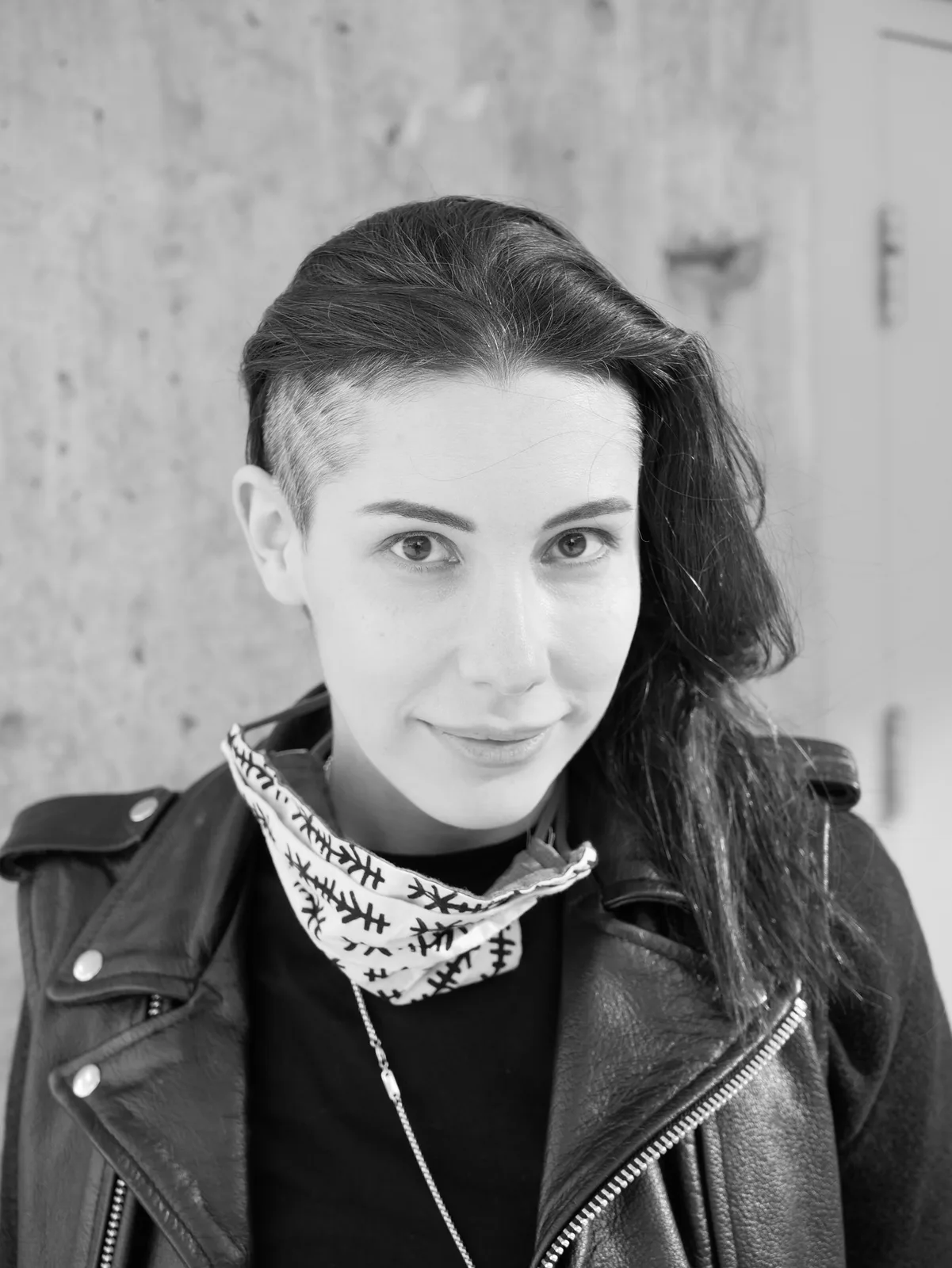
Black-and-white portrait of Kat Singer.
Kat Singer, digital photograph, 2020. Courtesy of the artist.

Are you at a crossroads in life, trying to figure something out, and open to an experience that might help you process what you’re going through? Do you enjoy touching soft textures such as yarn? Are you open to receiving a gift? If so, we invite you to participate in Stim Steward, an interactive performance by the multidisciplinary neurodivergent artist Kat Singer.

This intimate performance is inspired by the artist’s experience of alexithymia (a condition characterized by difficulty recognizing, understanding, expressing, and describing emotions), interest in liminal spaces, a fascination with textures, and an appreciation of sensory delights, dreams about community care, and the magic of coincidences.

Presented in a cozy tent lined with soft textiles and bathed in warm light, Stim Steward offers participants a one-on-one session in which ritual and reflection merge. As the artist sits across the table from you, they perform a rite involving an interplay of intention and chance, allowing you to interact with bespoke textile objects and choose one that most resonates with you as a talisman and companion for contemplation.

If you are in the process of puzzling something out, this space is for you! Participants are asked to arrive with a question. It may concern a crossroads, a pattern, a feeling, or a life circumstance that is still unfolding. This question does not need to be spoken aloud or perfectly formulated. Rather than offering a direct answer, the artist guides each participant through a primarily tactile process that engages curiosity and promotes greater attunement to one’s self.

The experience will be available to up to 12 participants. A sign-up sheet will be available on May 14 from 3:00 to 3:20 PM.

Please note that conversations in the tent are not therapy and are not intended to provide concrete answers or professional advice. Instead, they are offered as an artistic encounter and a sensory process through which a question or emotion may be held and explored. Participants interested in this encounter are kindly asked to refrain from wearing scented products.

Bio

Kat Singer (they/them) is a queer, multiply neurodivergent artist, educator, and mental health professional. Their work draws from their lived experience and spans an ever-expanding range of media, including photography, street art, painting, textile, sculpture, drawing, printmaking, and performance.

Singer’s work reflects the inherent contradiction of neurological conditions we currently label as autism and ADHD coexisting with a single brain. It attempts to convey the experience of inhabiting a liminal space between rigidity and fluidity, certainty and ambiguity, and structure and chaos.

May 14 · 6:00 PM

Sof Kreidstein

Resonant Vessel

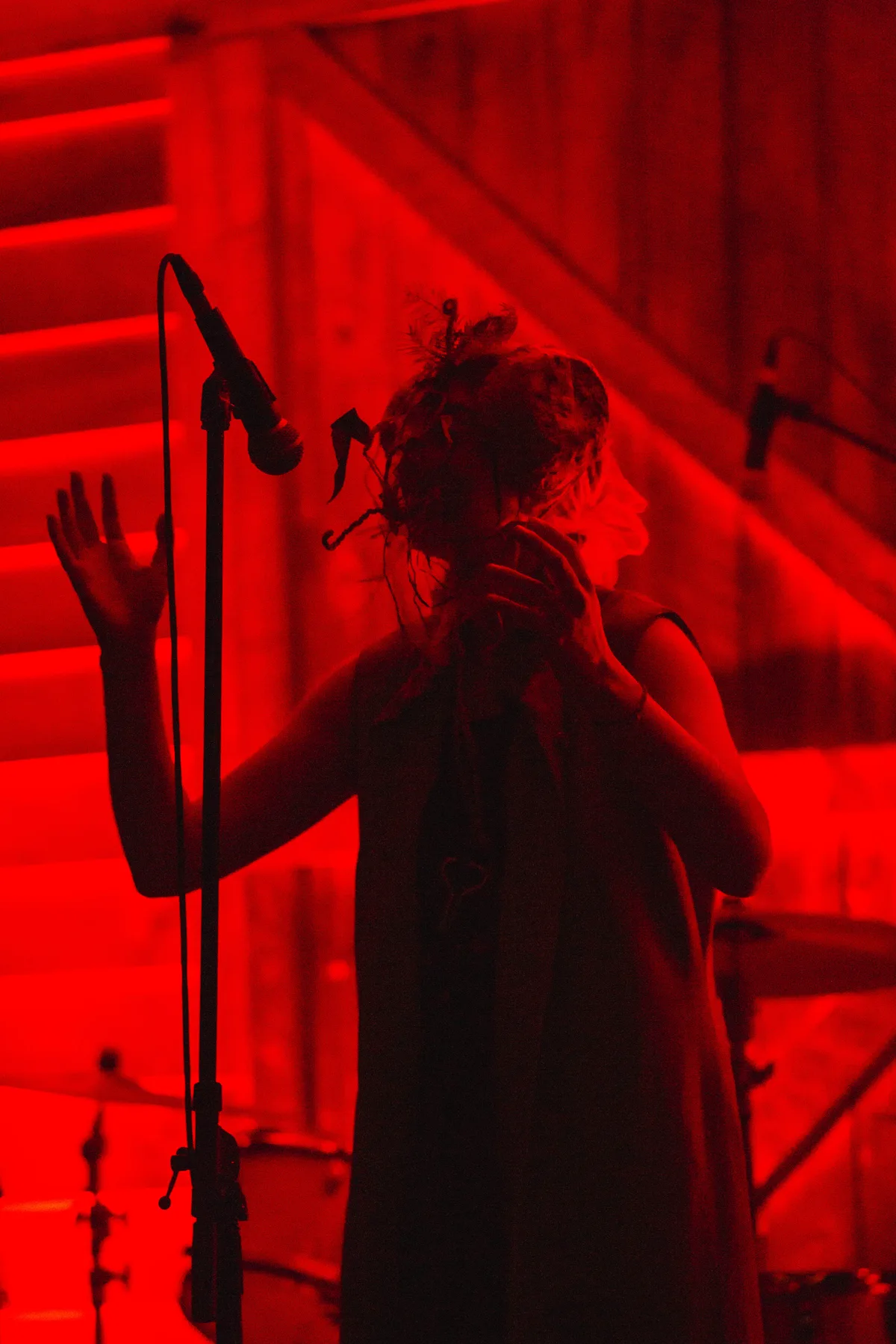
Sof Kreidstein performing in red light with a microphone.
Sof Kreidstein, buggy banquet, mask making workshop/performance, 2025. Photo by Lychee Chann. Courtesy of the artist.
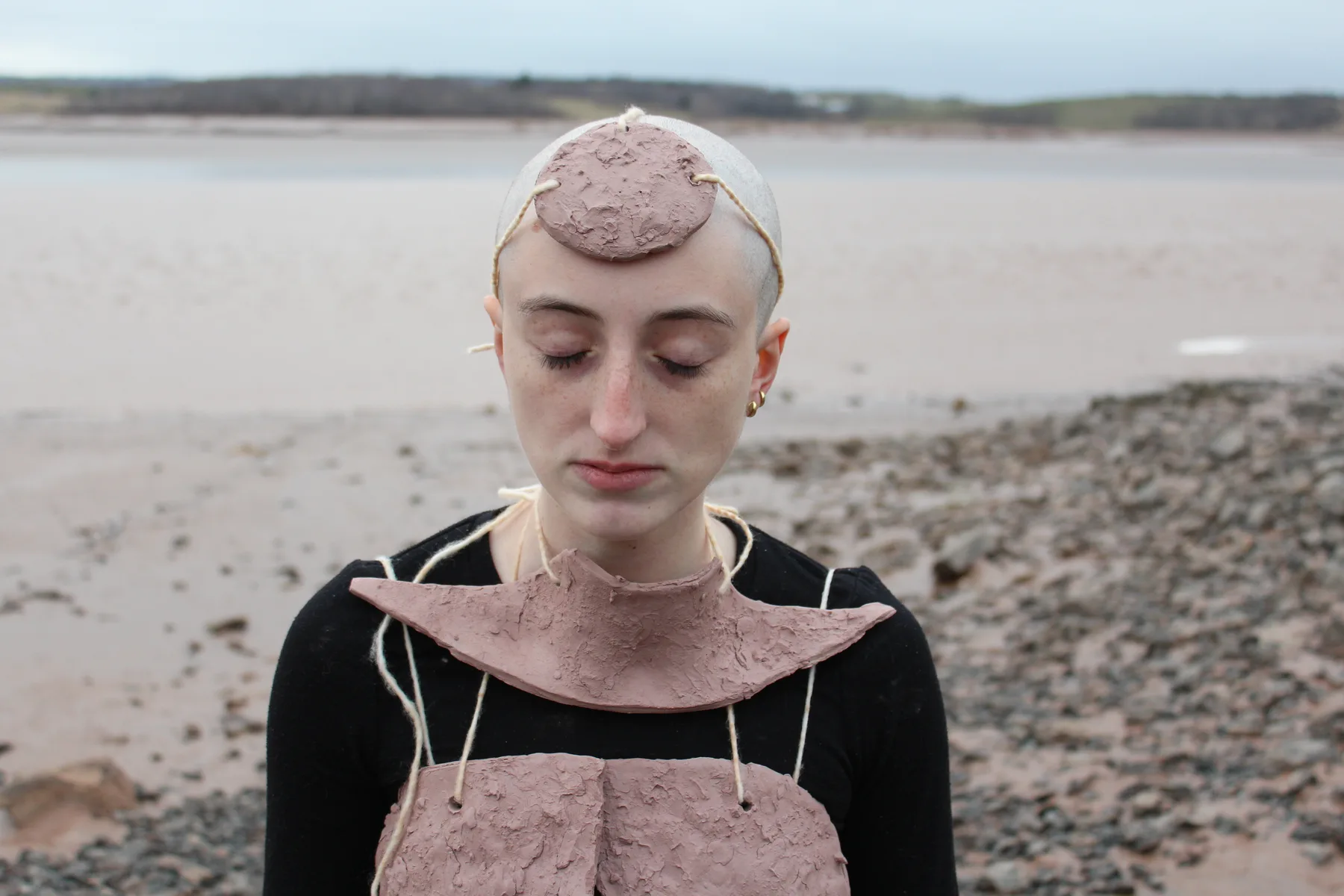
Sof Kreidstein portrait outdoors by water.
Sof Kreidstein, in between being in between infinite feeling ever shifting breaking healing, clay performance and video work, 2021. Photo by Wren Tian.

How might voice be channelled as a vessel for relation, nervous system regulation, and collective attunement? In Resonant Vessel, Sof Kreidstein approaches voice and sound as a connective tissue between body and beyond, shaped by sensory sensitivity. Drawing on their community-engaged performance practice, experimental sculpture process, and experience with echolalia and vocal stimming, the 40-minute performance unfolds as an improvised soundscape with participatory components, grounded in the tactile process of forming a clay resonance chamber. This work plays with deep listening and the reciprocal exchange of voice, material, and environment. What emerges is not a fixed composition but an interconnected breathing organism dissolving barriers between individual and environment.

Resonant Vessel weaves a dialogue with surreal sound mimicry, ancestrally rooted melodic structures, and the highlighted inevitable ambient noise of the space itself. The clay form echoes and augments the artist’s body as an extended porous vessel in movement. Altered, opened, and closed over the course of the performance, the vessel will shift the resonance and amplification of their voice, along with the responsive nature of their sound making. A participatory element extends this process into collaboration. The audience is invited into an exchange of vocal stimming and somatic grounding through a collective humming drone. Through this gathering of breath, sound, and attuned attention, Sof explores neurodivergent sensory sensitivity and expression as a site of generative reciprocity.

Content note

This performance includes improvised vocalization in a group setting. Conscious of sensitivity, loud high-pitched sounds should not be included, but due to the unpredictable nature of collective sound making, this is not a guarantee.

Bio

Sof Kreidstein (they/them) is a transdisciplinary artist and facilitator based in Tsí Tkaròn:to (Toronto). With a poetic and experimental approach to material, performance, media, and language, their malleable practice unfolds through multifaceted installations and socially engaged projects. Guided by queer ritual, diasporic Jewish intergenerationality and mysticism, neurodivergent perception, abjection, intrigue, and ecological interconnection, Sof explores nonlinear patterns across micro- and macrocosmic realms.

Their work has been presented in various galleries and public art exhibitions across eastern Canada. Notable community engaged projects include ruach ‫( ח ור‬Nocturne Halifax Festival at the Canadian Museum of Immigration at Pier 21) and In Touch/In Motion (with QUIET PARADE, supported by Blackwood Gallery and Mount St. Vincent University). Their studio practice has been shared by the Anna Leonowens gallery, HEAT WAVES (Eyelevel), The Roundtable Residency (virtual exhibition), Fulcrum (Coyote Tales Farm), the White Rabbit Festival (Red Clay Farm), and Tangled Art + Disability.

As a facilitator, Sof centers embodied processes and spiritually grounded gatherings. They have nurtured creative learning spaces in Poetry Unbound at Workman Arts, Magic Mirror workshops at the Koffler Gallery, Soul Candle workshops at the Musée du Montréal Juif and MNJCC, Deviant Drash at Lishma, and various Toronto synagogues. They serve in leadership at Ha’Sadeh: Jewish Renewal and as Program Director of Machane Lev, a queer and trans-centred Jewish youth organization. As an Expressive Arts Therapist in training at the CREATE Institute, their work in community facilitation and care is ever expanding. Sof cultivates curiosity, belonging, and collective resonance across all aspects of their work.

May 14 · 6:50 PM

Parker A.M. Johnston

Isn’t Being a Man Supposed to Mean Something

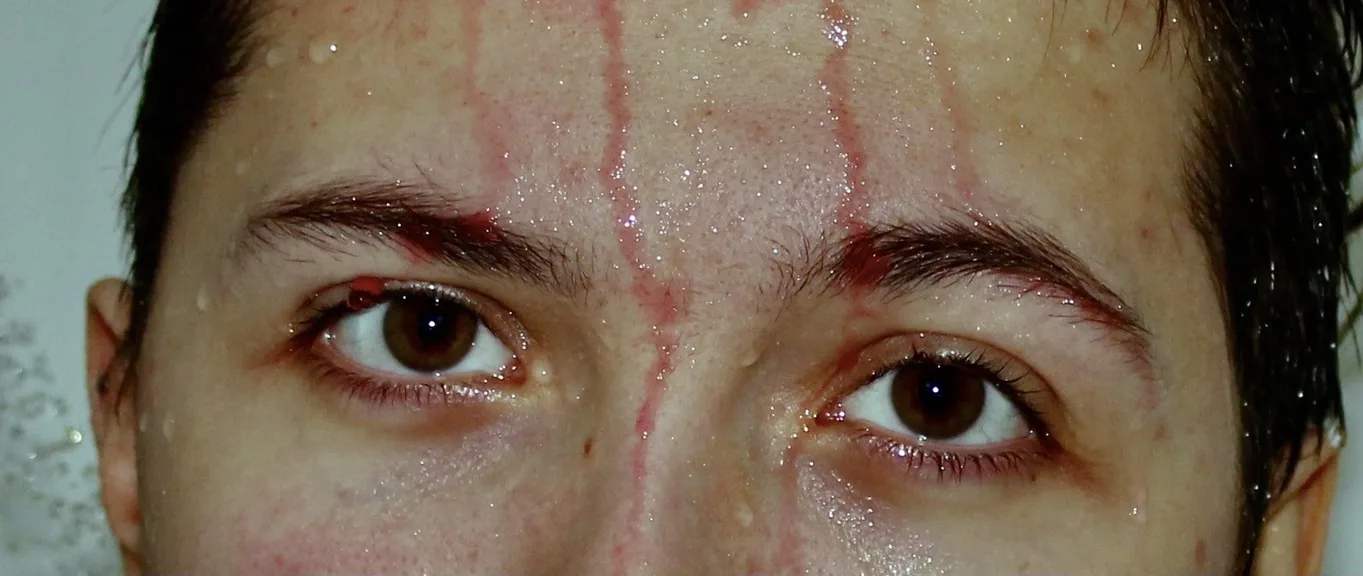
Parker A.M. Johnston self-portrait focused on the artist's eyes.
Parker A.M. Johnston, Stare (Supposed to Mean Something), digital photograph, 2025. Self-portrait by Parker A.M. Johnston. Courtesy of the artist.

In Isn’t Being a Man Supposed to Mean Something, Parker A.M. Johnston performs a reading from his zine of the same title, bringing together poetry and photography to examine transmasculinity, toxic masculinity, and monstrosity. Structured as a spoken performance of approximately 20 minutes, the work centres the voice as a direct, intimate means of engaging questions of gendered expectation, self-construction, and social unease.

Accompanied by photographs projected over his body, the performance extends the publication into live space, allowing image and text to operate in relation to one another. Rather than treating the poems as isolated readings, the work frames them as part of a broader visual and performative language shaped by tension, recognition, and contradiction. Projection becomes a way of layering the body with the images that inform the text, emphasizing the zine’s representation of identity as something seen, felt, and negotiated.

Grounded in Johnston’s wider practice across poetry, photography, and self-publication, the performance approaches monstrosity not simply as metaphor but as a critical way of naming the pressures and distortions that can accompany masculinity. In this setting, the reading becomes both reflection and confrontation, opening a space in which transmasculinity can be considered through image, voice, and the unstable threshold between intimacy and performance.

Content note

Content note: This performance includes themes of transmasculinity, toxic masculinity, intergenerational trauma, family violence and neglect, monstrosity, bodily injury, blood, self-harm, suicidal ideation, and consuming/devouring imagery. It also includes projected images layered over the performer’s body and images of surgery scars, which may be difficult for audience members with experiences of medical trauma. If you need support in Canada, call or text 9-8-8. Trans and questioning people in Canada can also contact Trans Lifeline Canada at 1-877-330-6366.

Bio

Parker A.M. Johnston (he/they) is an artist, performer, and photographer whose practice involves poetry, image making, and zine-based publication. Working through themes of nostalgia, monstrosity, relationships, and identity, he combines text and visual material to foreground vulnerability, embodiment, and self-representation. Johnston is one half of the independent publishing collaboration Raven and Ram. They are currently a student at the University of Ottawa, and his work appears in Zine R.A.C.K. Issue 2, Sick Stories, and Isn’t Being a Man Supposed to Mean Something. Johnston has also presented work in live literary contexts, including the Ottawa Fringe Under30 Showcase and VERSeFest 2026.

Access

Attend on your own terms.

This is a scent-free event. Please avoid wearing scented products. Masking is encouraged, and masks will be provided. A quiet space will be available on-site. Audiences are welcome to enter and exit the space as needed.

Audience members entering or leaving during performances are kindly asked to do so as quietly and mindfully as possible, with care for the performers and those around them.

Gallery TPW, 170 St Helens Ave, Toronto, ON M6H 4A1

Image credits

Courtesy of the artists

  1. lwrds duniam, Khipucamayoc: Weaver of Arboreal Entanglements, performance documentation, 2025. Photo by Natalia Benish-Kalná. Courtesy of the artist. (Cover Page)
  2. Pixel Heller, Northern Jumbie, digital photograph, 2025. Courtesy of the artist. (Page 7)
  3. Elaine Chan-Dow, Community Picnic, Edgeland Collective, photographic image, natural dye, plant fibres, 2025. Courtesy of the artist. (Page 9)
  4. Hope-Adina Adler, digital photograph, 2024. Courtesy of the artist. (Page 11)
  5. Tess Martens, Jelly Belly, 2020. Photo by Fenia Kotsopoulou. Courtesy of the artist. (Page 13)
  6. Wang Zi, digital photograph, 2023. Photo by Angela Pan. Courtesy of the artist. (Page 15)
  7. Zhu Dandan, digital photograph, 2024. Photo by Wang Zi. Courtesy of the artist. (Page 15)
  8. lwrds duniam, Pachamama triptych spell, digital performance documentation, 2023. Courtesy of the artist. (Page 17)
  9. Christopher He, digital photograph, 2025. Courtesy of the artist. Special thank you to Alexander Jacobi (@alexanderjacobiphotography). (Page 19)
  10. Lux Gow-Habrich, Blood Song, performance, 2025. Photo by Kevin MacCormack (@kevinthefellow). Courtesy of the artist. (Page 20)
  11. Lux Gow-Habrich, Blood Song, performance, 2025. Photo by Kevin MacCormack (@kevinthefellow). Courtesy of the artist. (Page 21)
  12. Kat Singer, Untitled, acrylic yarn, 2025. Courtesy of the artist. (Page 22)
  13. Kat Singer, digital photograph, 2020. Courtesy of the artist. (Page 23)
  14. Sof Kreidstein, buggy banquet, mask making workshop/performance, 2025. Photo by Lychee Chann. Courtesy of the artist. (Page 25)
  15. Parker A.M. Johnston, Stare (Supposed to Mean Something), digital photograph, 2025. Self-portrait by Parker A.M. Johnston. Courtesy of the artist. (Page 27)
  16. Sof Kreidstein, in between being in between infinite feeling ever shifting breaking healing, clay performance and video work, 2021. Photo by Wren Tian. Courtesy of the artist. (Back Cover)